Star Formation & Protoplanetary Disks
Spitzer Legacy Project: Gould's Belt
Interstellar Group : Star Formation & Protoplanetary Disks
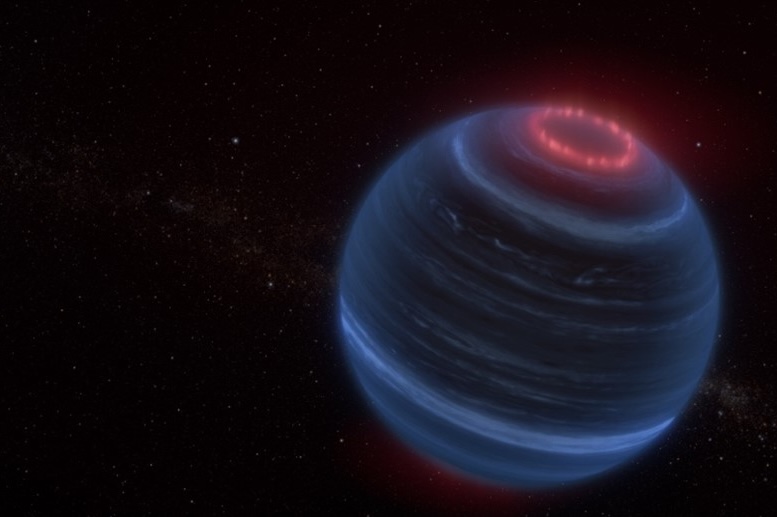
Brown Dwarfs and Sub-Brown Dwarfs
Origins of Transitional Disks
Classical T-Tauri Stars
Gas, Ice, and Dust in Protostellar Environments
Episodic Accretion
FOOSH
Herschel Open Time Program
(FU Orionis Objects Surveyed with Herschel)
DIGIT
Herschel Key Program: Dust, Ice, and Gas in Time
Spitzer Space Telescope; Star and Planet Formation
Sally Dodson-Robinson, Neal Evans, Keely Finkelstein, Joel Green, Michael Gully-Santiago, Sam Harrold, Paul Harvey, Amanda Heiderman, Daniel Jaffe, John Lacy, Daniel Lester, John Scalo
![]() | Assistant Professor Research Interests Planet formation, planet host composition, protostellar disk chemistry, Galactic chemical evolution, debris disks and brown dwarfs. Group Areas | |
![]() | Professor Research Interests Molecular clouds; star formation; millimeter, submillimeter, and infrared astronomy. Group Areas Spitzer Legacy Project: c2d, Spitzer Legacy Project: Gould's Belt | |
![]() | Research Associate/Lecturer Research Interests Star Formation: Galactic and Extragalactic, Galaxy Formation and Evolution, Astronomy Education Group Areas | |
![]() | Research Associate Research Interests Spitzer Instrument Team: IRS_Disks; Spitzer: Jets and Outflows; Herschel: Protostars and protoplanetary disks. | |
![]() | Senior Research Scientist Research Interests Infrared studies of the interstellar medium; star formation; infrared imaging. Group Areas | |
![]() | Professor Research Interests Infrared spectroscopy of protostars and star forming clouds; submillimeter observations of interstellar gas, star formation regions, and protostars; physics of the dense interstellar medium; instrumentation for infrared spectroscopy. Group Areas Spitzer Legacy Project: c2d, HII Regions & Planetary Nebulae, IGRINS, Micromachined Silicon Diffractive Optics, GMTNIRS, EXES: mid-IR spectrograph | |
![]() | Professor Research Interests Infrared astronomical spectroscopy; infrared studies of interstellar molecules; studies of ionized gas in the Galactic Center; development of high-resolution infrared spectrographs. Group Areas HII Regions & Planetary Nebulae, Spitzer Legacy Project: Gould's Belt, EXES: mid-IR spectrograph | |
![]() | Research Fellow Research Interests Infrared emission lines; abundances in H II regions; infrared studies of star formation; starburst galaxies. | |
![]() | Professor Research Interests Star formation; interstellar medium; turbulence; galaxy evolution; complex systems; astrobiology. Group Areas Astrobiology, Milky Way Evolution, ISM and Star Formation, Planet Formation, Atmospheres & Life | |
![]() | Graduate Student Research Interests Discovery and characterization of very low mass stars and brown dwarfs; star and planet formation; infrared astronomical spectroscopy; innovative technologies for astronomical instrumentation; electron beam lithography; semiconductor processing; optical metrology Group Areas | |
![]() | Graduate Student | |
![]() | Graduate Student Research Interests Star Formation: Galactic and Extragalactic, Galaxy Morphology, Galaxy Environments, Galaxy Formation and Evolution, Multi-wavelength Studies of Galaxies Group Areas Star Formation (Extragalactic), Galaxy Mergers, Galaxy Clusters | |
SEDs with stellar atmosphere and disk models for log(L*/Lsol)≤ − 1.8. In each panel, the blue open and filled circles show the observed and dereddened data, respectively. The grey solid line shows the SED of the stellar atmosphere model (Allard et al. 2001; Hauschildt et al. 1999). The stellar atmospheres shown here have the values of Teff and log(g) listed in Table 6, and are superposed (not fit) onto the data for the cloud distances listed in Table 2. The black solid line is the predicted SED of a face-on, flared disk with an inner radius equal to the stellar radius (Ri = R*). The black dashed line is the predicted SED of a face-on, flat disk with Ri = R*. The green line denotes the best fit to the data and is solid for flared disk models and dashed for flat disk models, as listed in Table 6. Source #11 is best-fit by a flat, face-on disk with Ri = R*. Increased inner radii are required for #1 (Ri = 4 R*) and #13 (Ri = 3 R*). Inclined disks with Ri = R* are required for #5, #7, and #18 (i = 60°). Inclined disk (i = 60°) with large inner radii (Ri = 3 R*) are required for #14 and #17.
from
Young, Low-mass Brown Dwarfs with Mid-Infrared Excesses astro-ph